Train: XPT
Travel Duration: 11 hours, 45 minutes
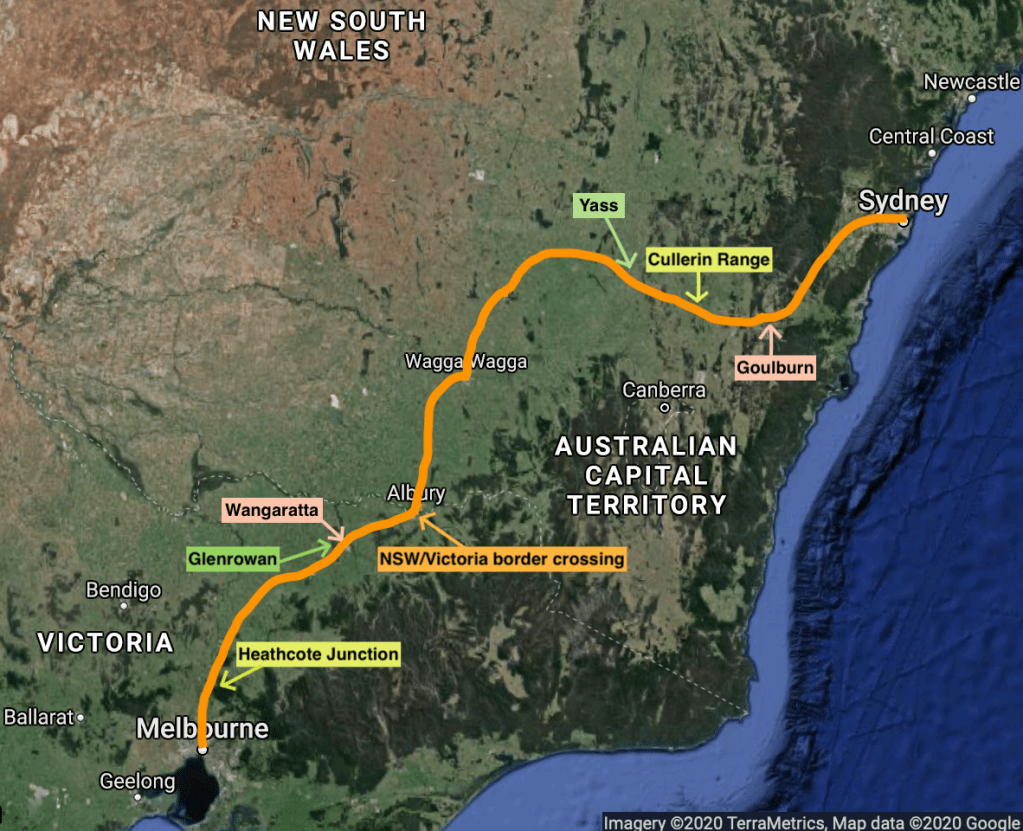
The XPT (short for ‘express passenger train’) connects Australia’s two largest cities: Melbourne, Victoria and Sydney, New South Wales. I took this 960km rail journey in December 2020. This was my third time riding the Melbourne–Sydney XPT, having previously taken this train in March 2018 and April 2020. The ticket price is usually between $78–$130 AUD per person (including luggage), depending upon demand and how early one books.
The northbound XPT departed Melbourne’s Southern Cross Station at 8.30am and arrived at Sydney’s Central Station at approximately 8:15pm. An overnight XPT with a sleeping car also runs between the two cities. My guide for this journey was a Tripadvisor page which provided information about the train, the various towns we passed through, and points of interest en route.
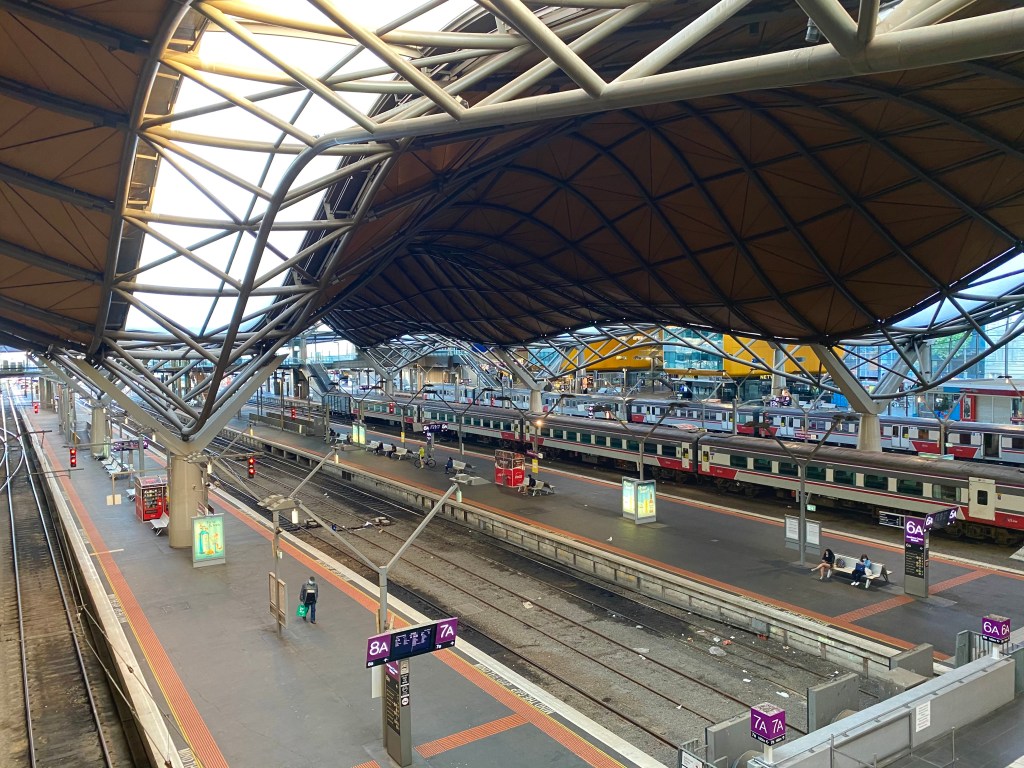
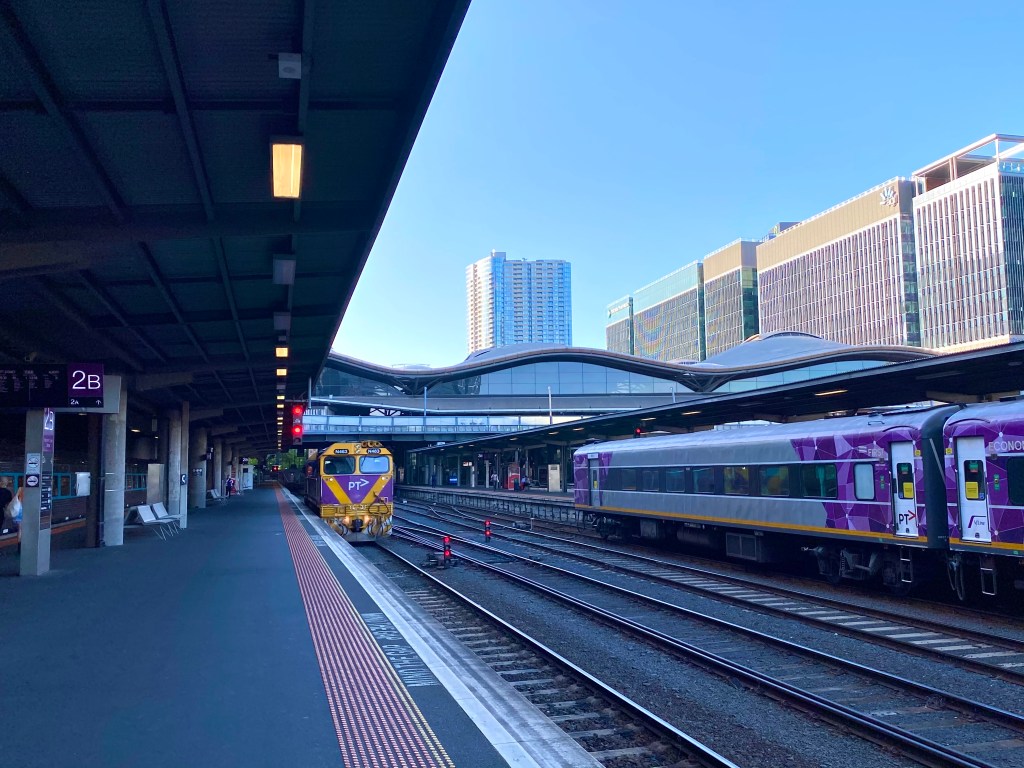
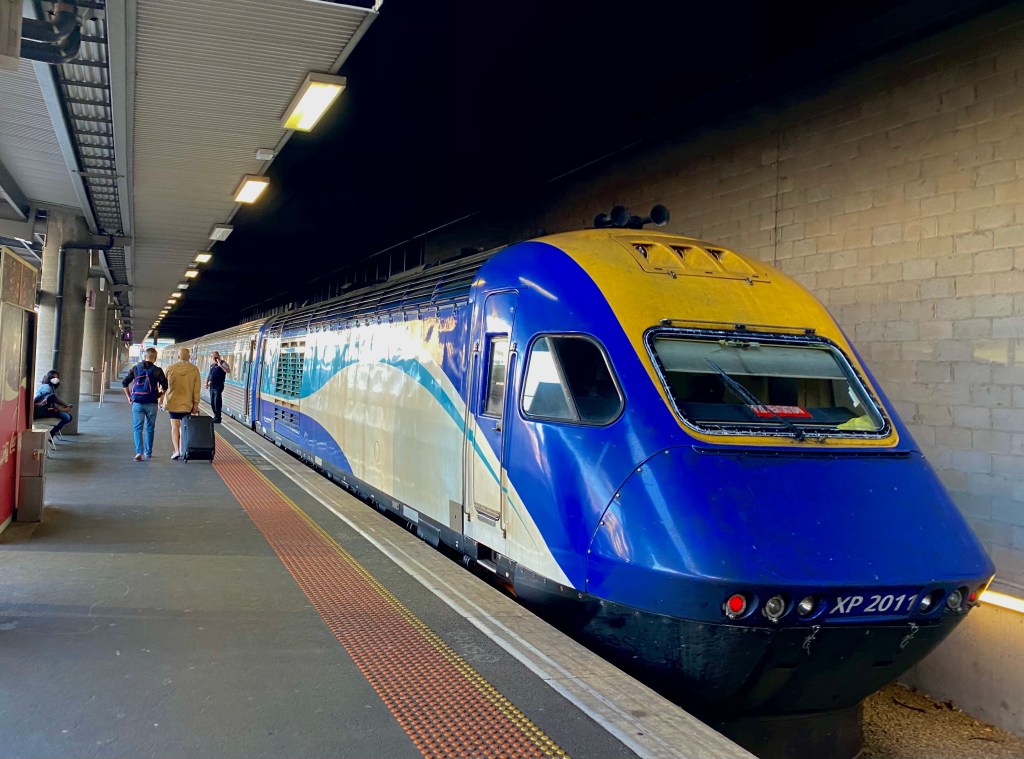
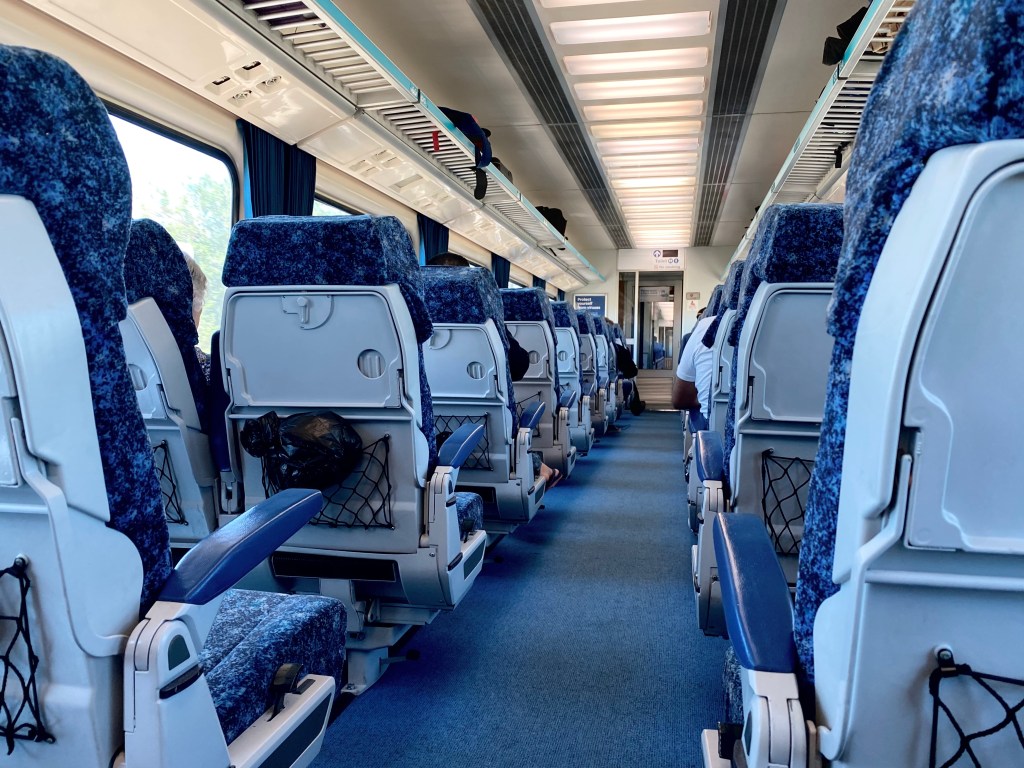
The train contained a buffet car serving drinks, snacks and hot meals, and passengers have the option of either checking in their large and/or heavy luggage before boarding the train, or storing their luggage at the end of the carriage. I opted for the former option and found it to be a relatively simple process. The below picture shows the interior of the train.
Melbourne and Sydney were originally connected by rail in 1883, however, it was not until the opening of a standard gauge track across the whole route in 1962 that travel by train between the cities was possible.[2] The XPT is based on British Rail’s High Speed Train (The InterCity 125) with some amendments, including a reduced top operating speed and a modified cooling system for the hotter and dustier Australian conditions.[3]
The XPT has a maximum permitted speed of 160 km/h.[4] In the lead up to the 2019 federal election, the Australian Labor Party promised to spend $1 billion AUD securing a land corridor for a future high-speed rail link between Melbourne and Brisbane via Sydney and Canberra. It was said that the high-speed trains would travel up to 350km/h, cutting the journey time between Melbourne and Sydney to just three hours.[5] In April 2020, the Shadow Minister for Infrastructure, Transport and Regional Development called on the Government to fund a bullet train, labelling it an ‘economic game-changer’ in the post-COVID-19 recovery.[6] However, a report published in May 2020 by the Grattan Institute concluded that Australia’s cities are too small and too far apart to justify the cost of high-speed rail. It was reported that it is rare for bullet trains to span a distance of 1,000km or more and, when they do, they usually serve populations of at least 50 million. It was further noted that the majority of high-speed rail projects do not recover their operating costs, with only two recovering their construction costs — Japan’s Tokaido Shinkansen, and France’s Paris-to-Lyon line.
For now, it seems likely that the train trip between Melbourne and Sydney will retain its nearly 12 hour duration, and this is certainly not a bad thing. From past experience, I have found that one needs at least 8 hours on a train to properly relax and attain maximum enjoyment from the journey.
My online guide informed me to expect at least ten changes in scenery/topography over the course of the XPT’s journey. My travel companion was not a train enthusiast and had never before been on a rail journey of this duration. I took the opportunity to record his hourly reflections on the experience. These observations are repeated below.
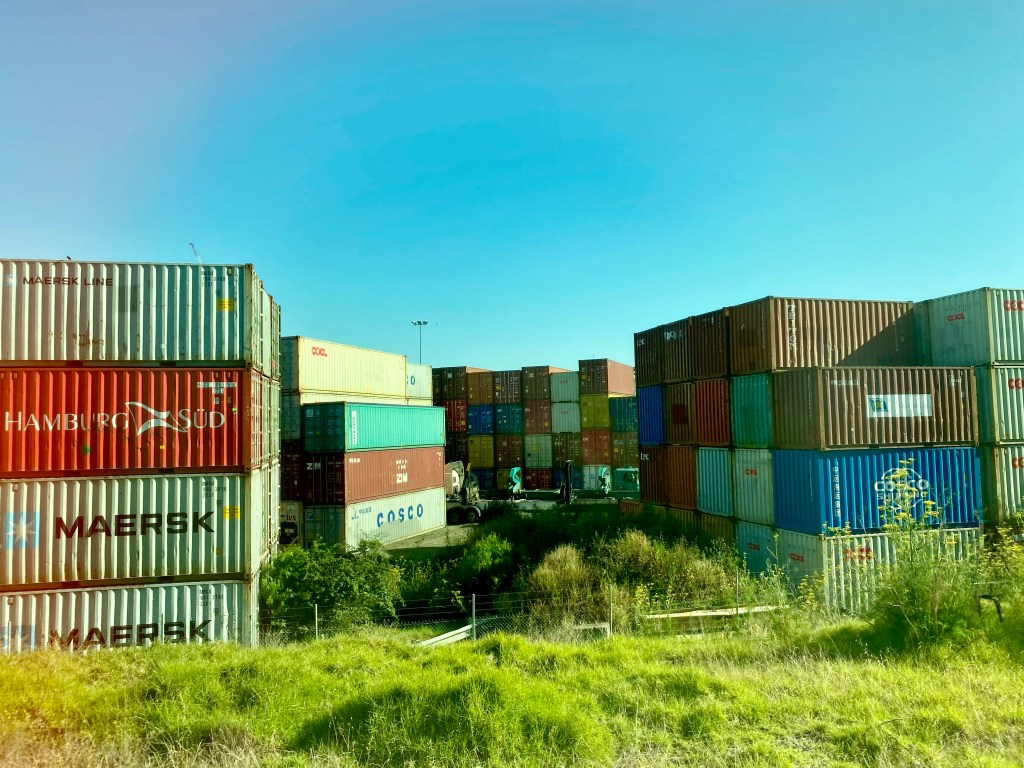
After departing Melbourne’s Southern Cross Station, the XPT travelled through industrial suburbs and freight yards. My online guide notes that while these sights may be of low interest, they nevertheless reflect the city’s commercial prosperity.
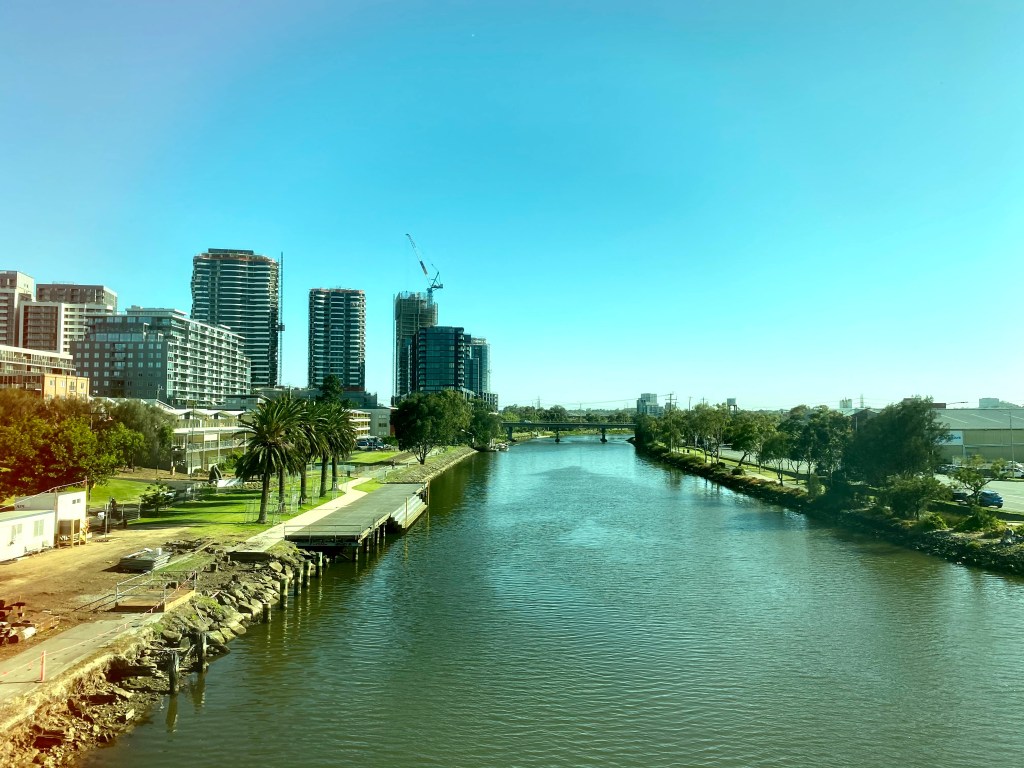
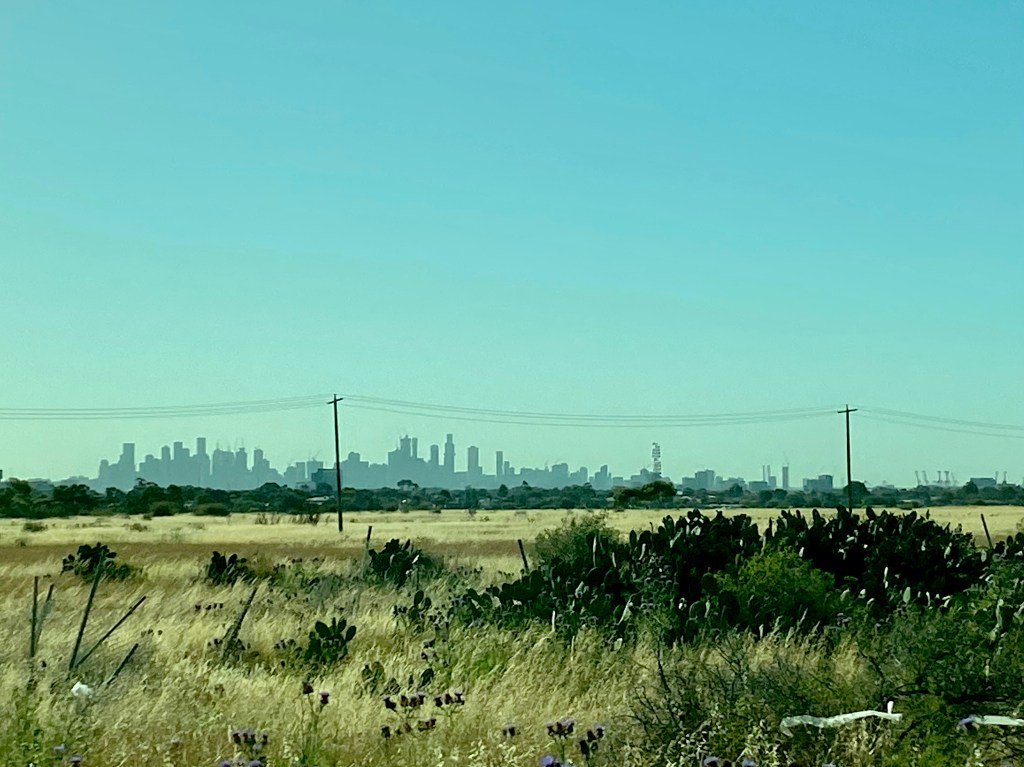
As the XPT continued through Melbourne’s western suburbs, the city’s skyline was visible on the eastern side of the train.
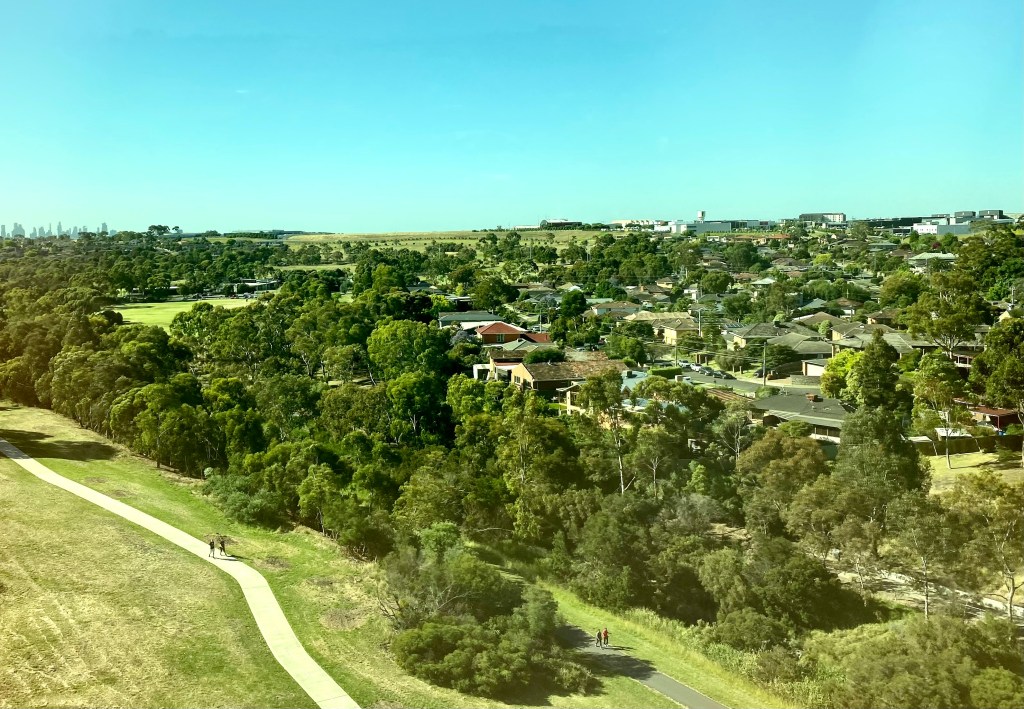
As the train approached Wallan, it was forced to travel at a reduced speed due to a signal failure. It was in this same location that the XPT derailed in February 2020, killing two people. Shortly after, the train passed Heathcote Junction which marks the highest point on the line in Victoria (1145ft above sea level). My travel companion failed to appreciate this fact, observing that planes reach much greater heights.
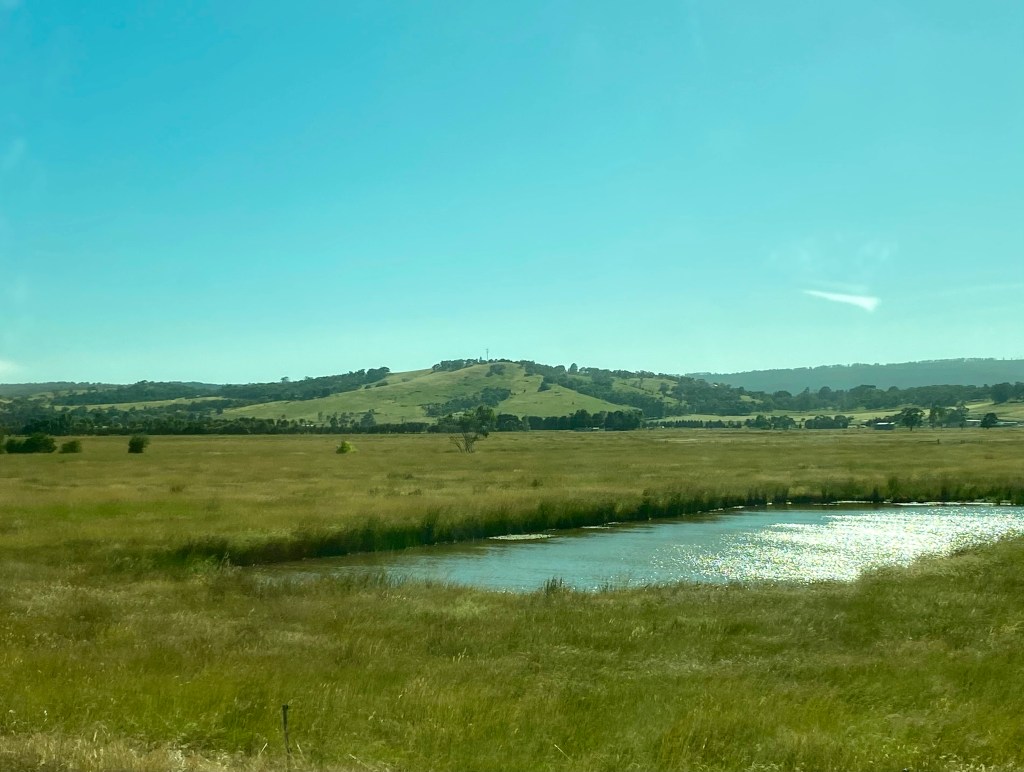
1 hour update from my travel companion: “Quiet and peaceful, much more so than a plane. Everyone seems fairly respectful”.
For the next hour, the train continued through broad valleys and several towns, stopping at Seymour at the southern end of the Goulburn Valley.
2 hour update from my travel companion: “Despite having to wear masks, I really appreciate the additional freedom”. My travel companion then proceeded to give the example of when he dropped one of his earphone pieces and was able to stand up and search for it – a luxury which he would not have enjoyed on a plane.
Shortly after the two hour mark, the train arrived at Benalla. My online guide informed me that Benalla is the centre of a prosperous rural district in north-eastern Victoria.
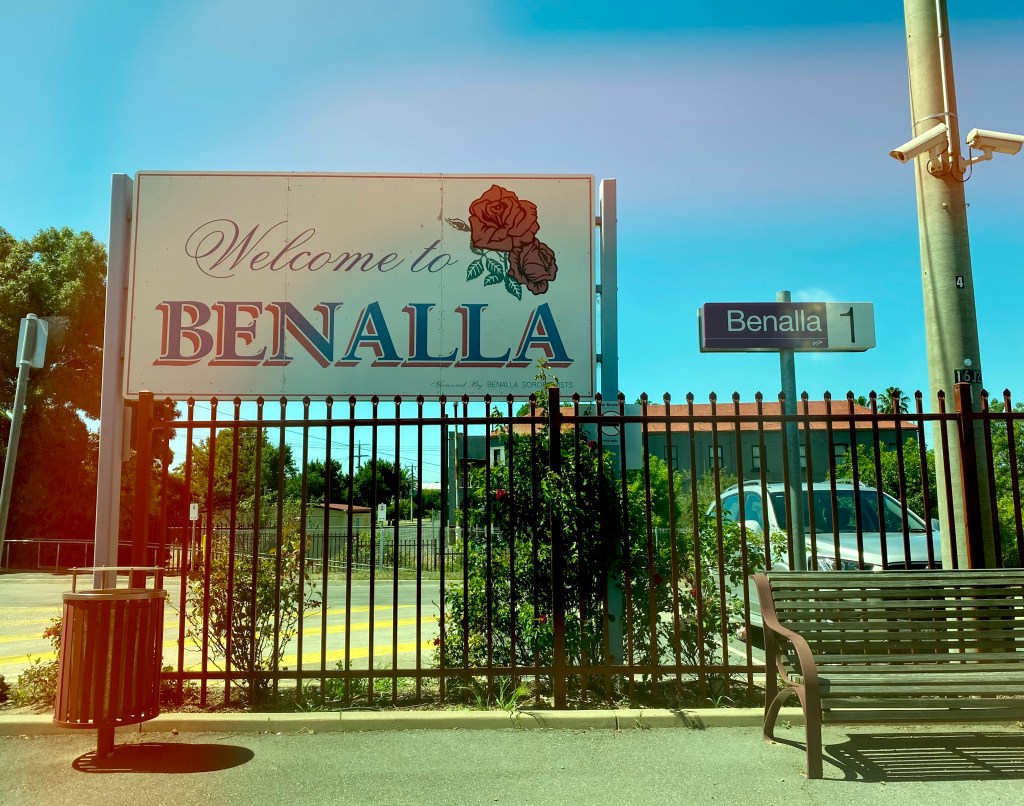
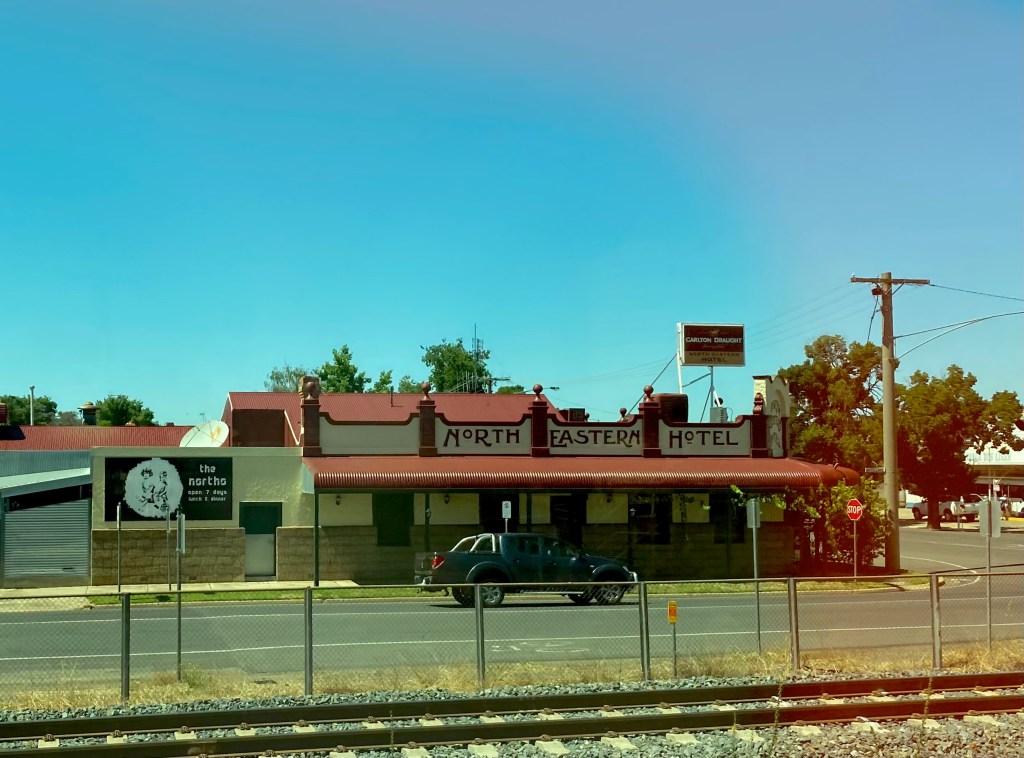
The next point of interest en route was Glenrowan. My online guide directed me to look out the western side of the train for a view of the remnants of the Glenrowan Inn. It was here that Ned Kelly made his last stand in 1880. Approximately 15km after Glenrowan, the train stopped at Wangaratta. Gold was discovered here in 1852 and the city became an important service centre for those working the goldfields.[7] My online guide described Wangaratta as ‘the centre of a varied rural and industrial area including wineries and textiles’.
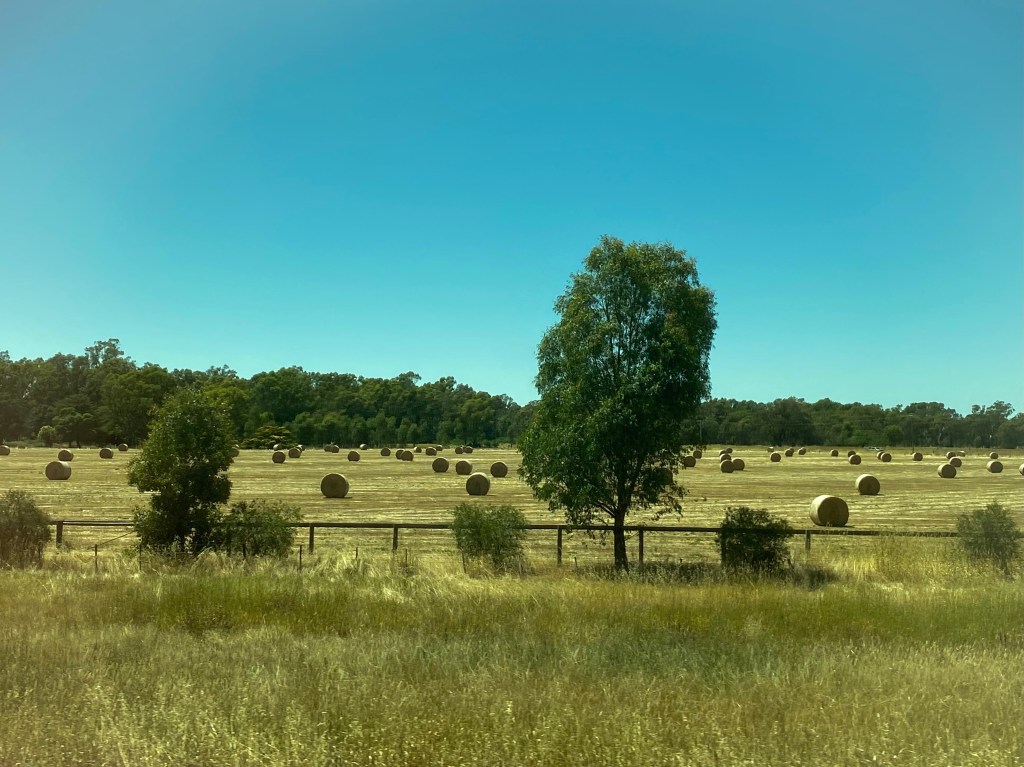
3 hour update from my travel companion: “I liked the part where I looked out the window and saw a tree”.
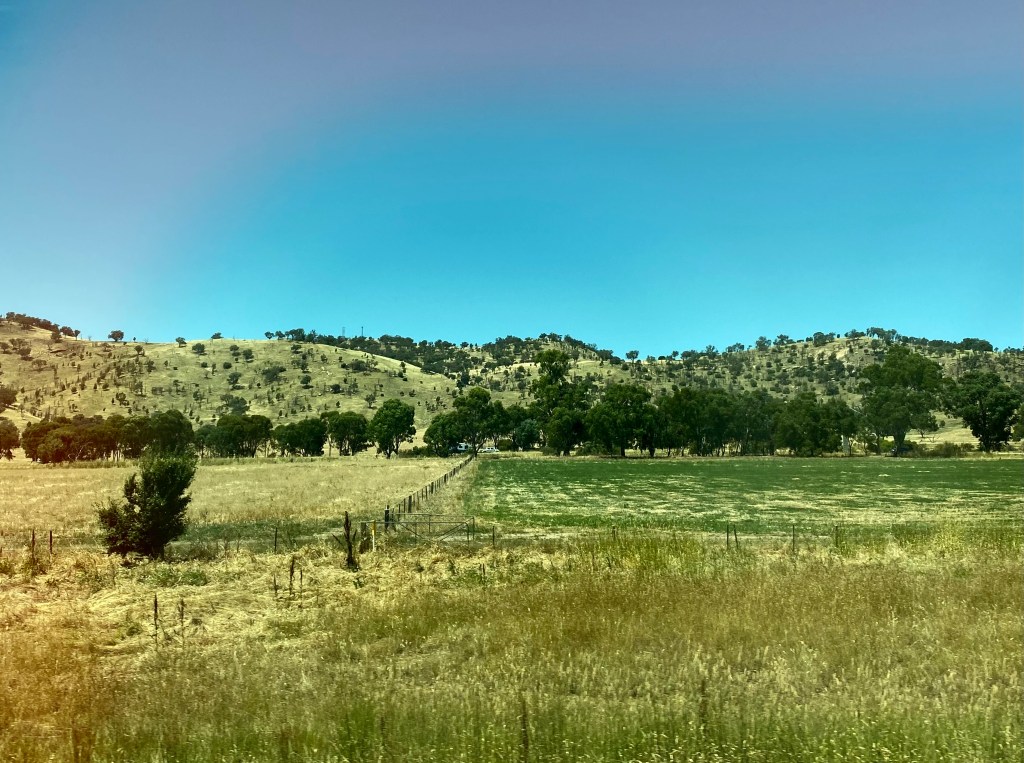
After crossing the Murray River, the train’s next stop was at Albury, just after crossing the New South Wales border. Soon after, the train pulled into Henty Station. In the 1800s, German immigrants following the Murray River from South Australia settled in Henty.[8] Headlie Taylor, a wheat farmer from Henty, transformed agricultural machinery in 1914 with his invention of the header harvester.[9]
4 hour update from my travel companion: “Compared to an airplane, I felt much more secure eating my lunch on a train. I didn’t feel like the food was going to fly everywhere.”
After lunch, the train stopped at the Cathedral city of Wagga Wagga – the largest inland city in the Riverina region of New South Wales. Wagga Wagga is located midway between Sydney and Melbourne.
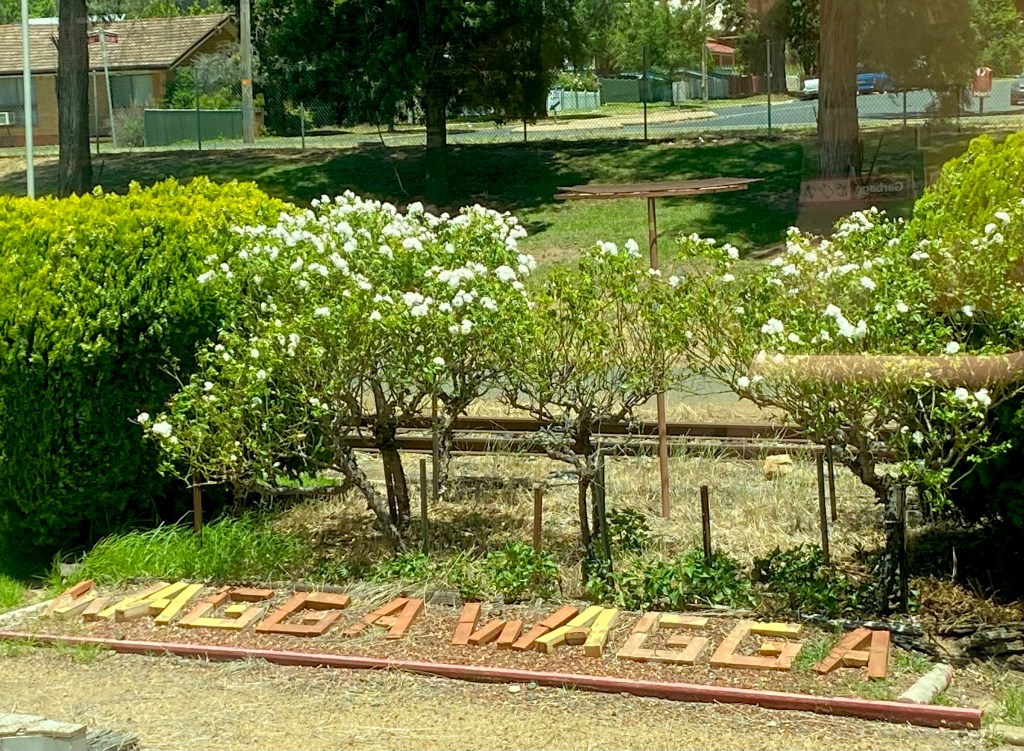
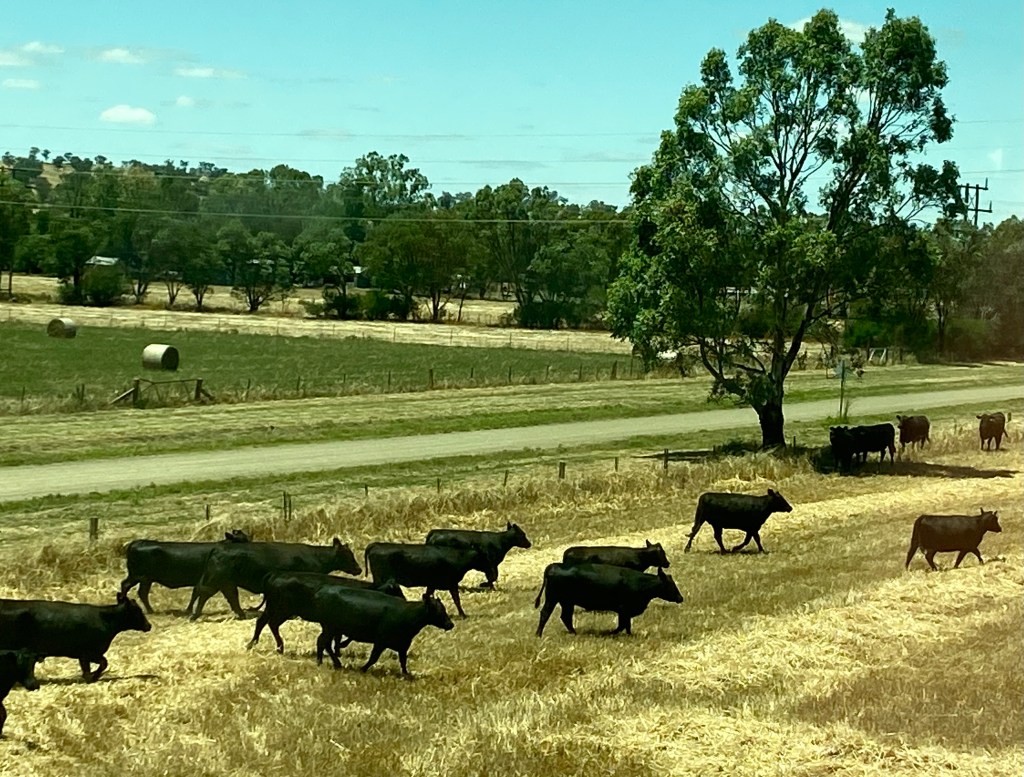
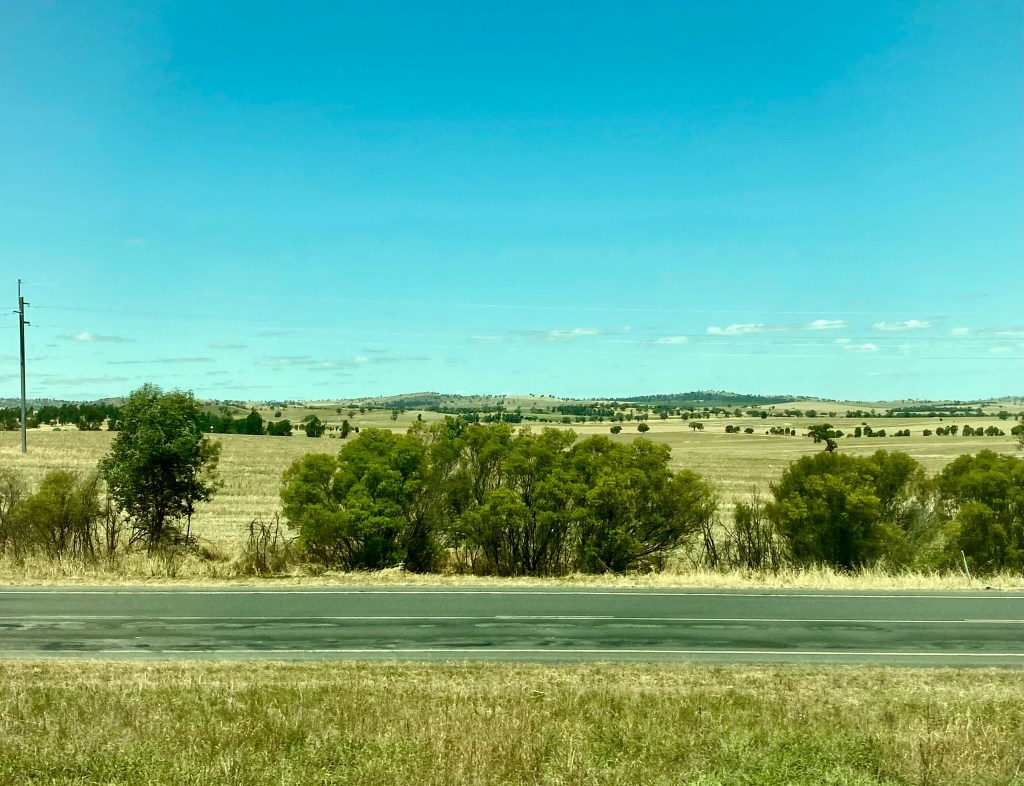
5 hour update from my travel companion: “I’ve only felt like I’ve needed to use the puke bag a couple of times.”
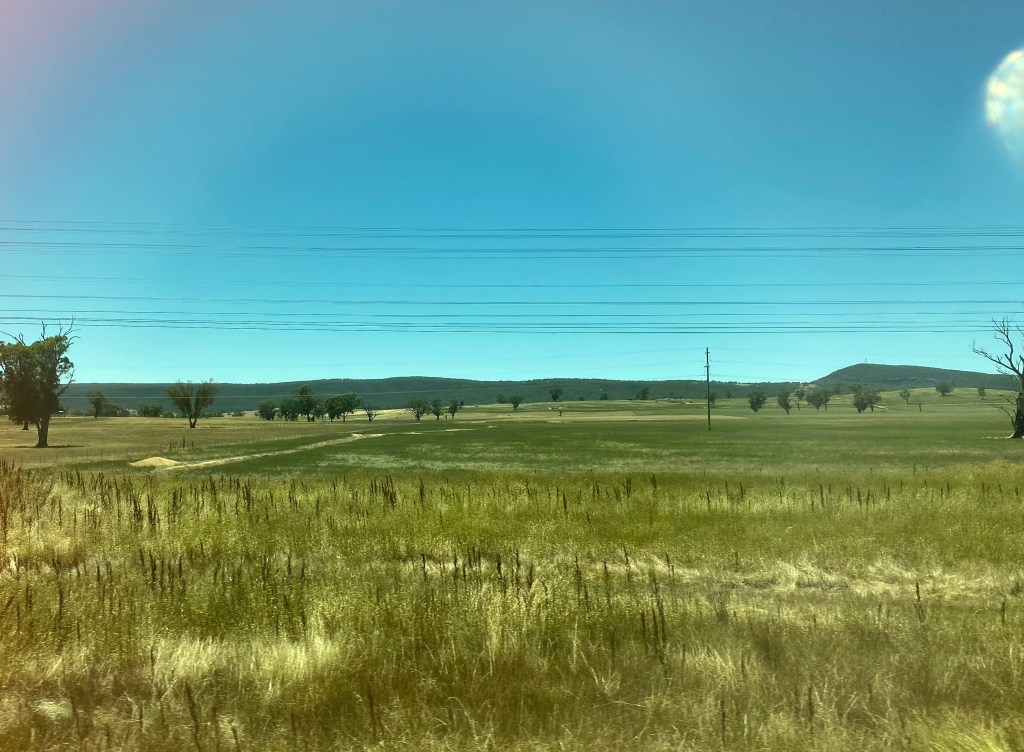
The XPT continued to travel through wheat growing country. My online guide informed me that close to Junee station on the western side of the train lies the Monte Christo Homestead which is believed to be haunted. Soon after, the train ascended Bethungra Hill. Here, the northbound XPT takes a different route to the southbound train, climbing the hill by way of a spiral loop and crossing the southbound line several times.
6 hour update from my travel companion: “How many hours left on this godforsaken mechanical abomination?”
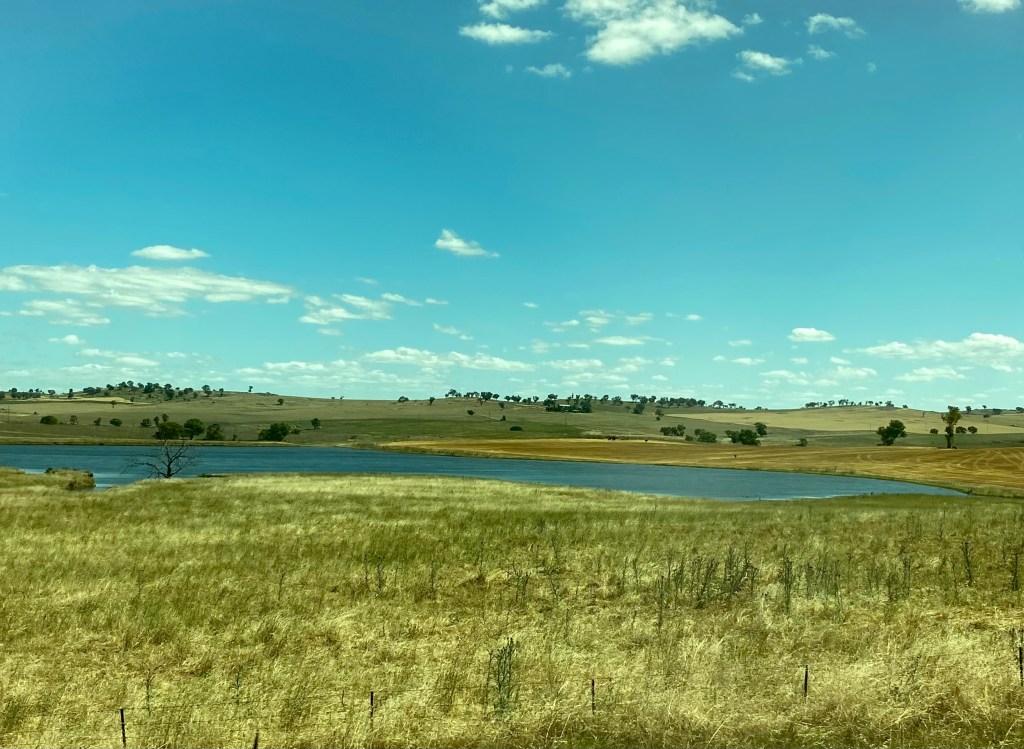
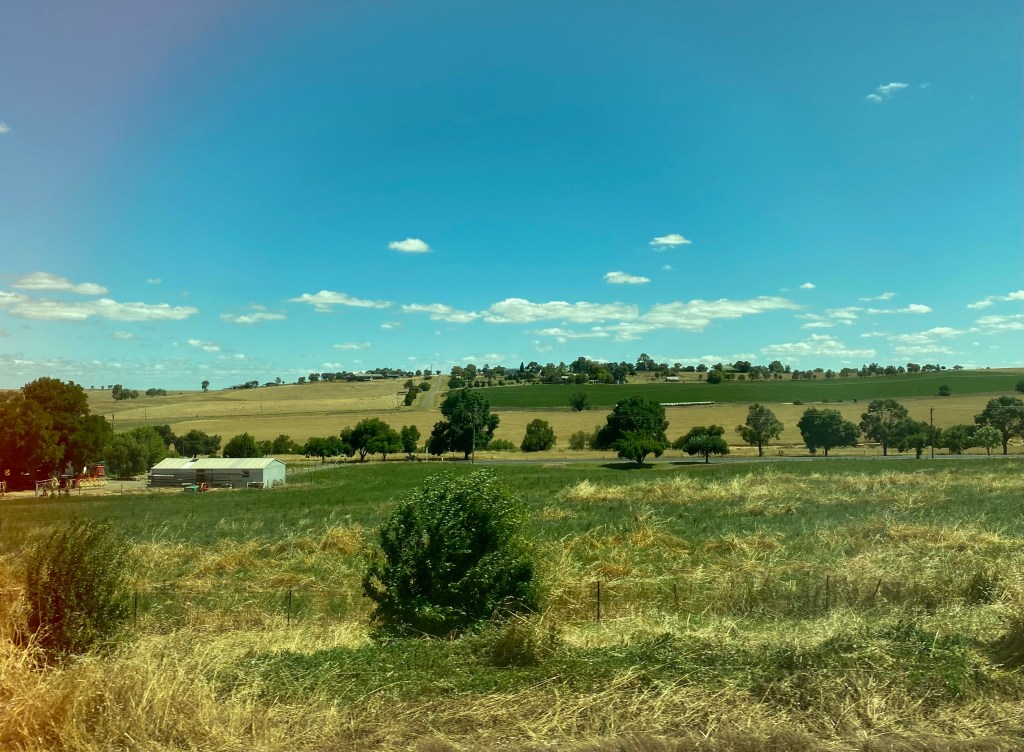
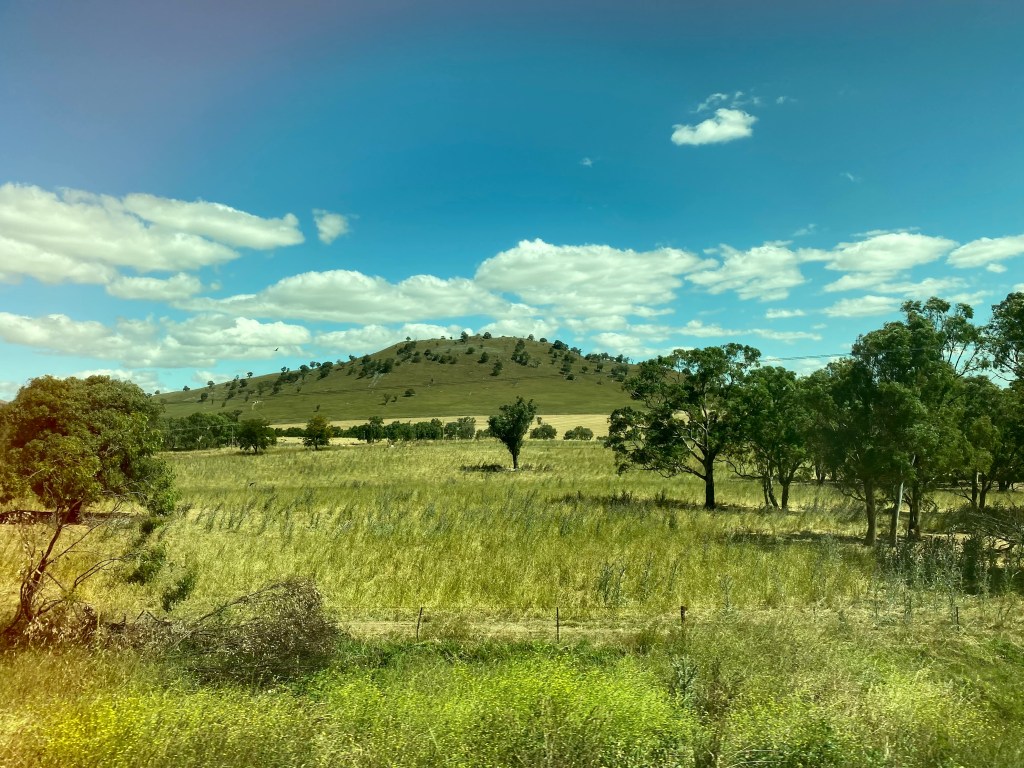
7 hour update from my travel companion: “I don’t think I’ve ever seen as many abandoned cars in the middle of fields in my life. There are a bunch of people owning rural properties who must just leave their wrecked cars there.”
The XPT then passed through Binalong which my online guide identified as noteworthy for its canola fields, particularly when the crop is in full bloom.
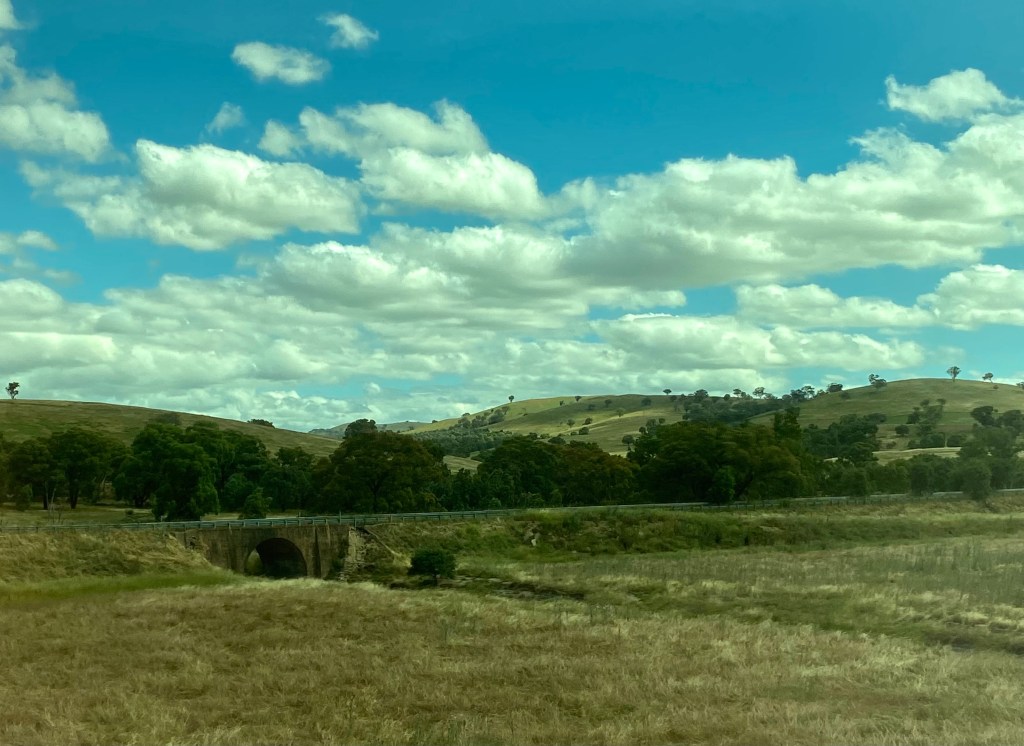
The next point of interest was the town of Yass. Yass is known as a famous merino wool-producing district.[10] Passengers can alight in Yass and catch a connecting coach to Canberra (the capital of Australia).
8 hour update from my travel companion: “I have some advice for your readers. I definitely recommend packing some ibuprofen in your luggage.”
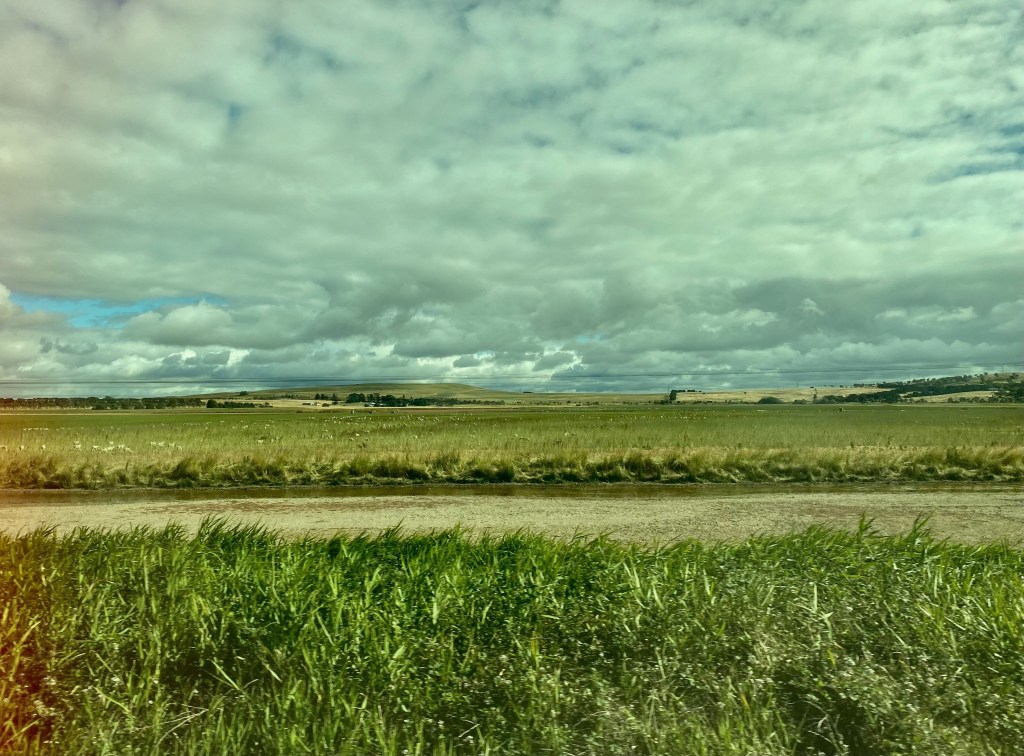
9 hour update from my travel companion: “Losing touch with reality; hallucinations are setting in.”
The summit of the line (2396ft above sea level) was reached when the XPT crossed the Cullerin Range. This area is marked by long lines of wind generators.
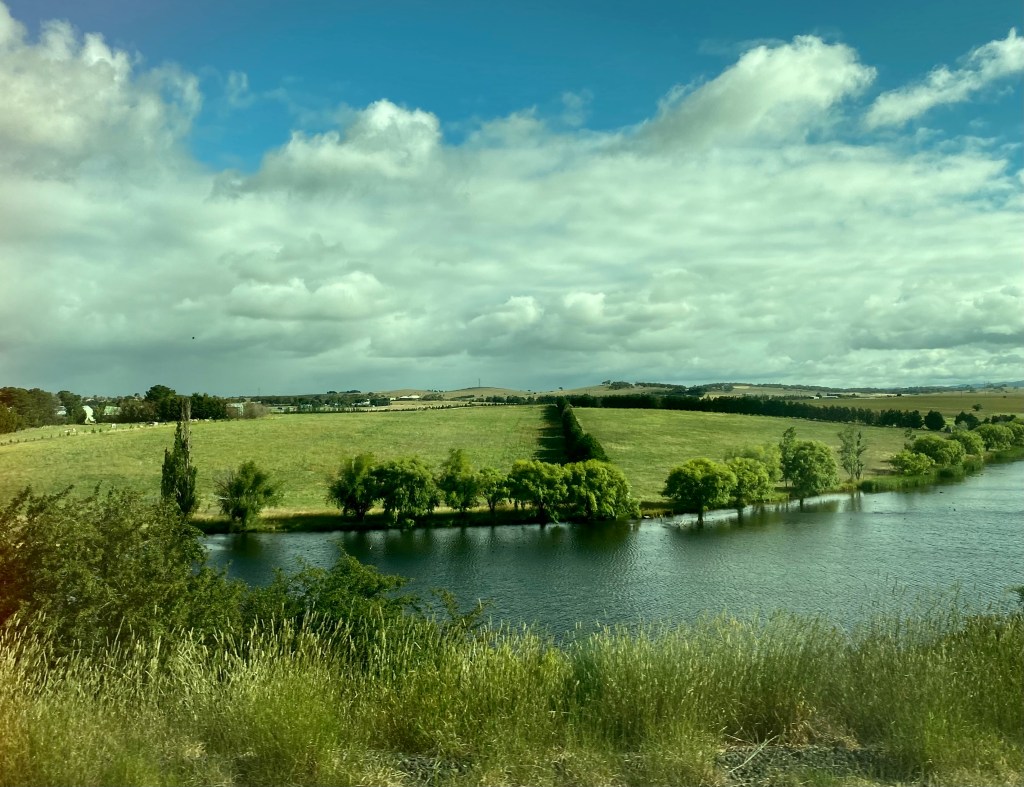
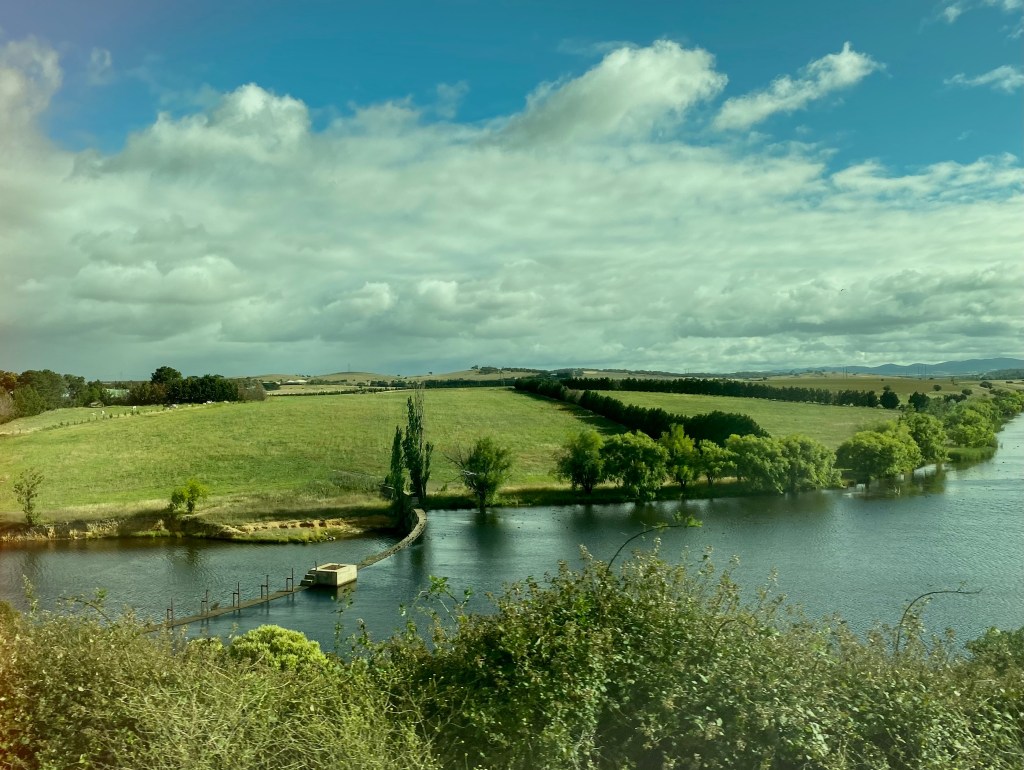
Soon after, the XPT arrived at Goulburn – Australia’s oldest inland town. My online guide described Goulburn as ‘the centre of a large and prosperous grazing industry producing fine Merino wool’. After a brief stop, the train passed over a heritage-listed 14 arch viaduct crossing the Mulwaree River. As the day drew to a close, the weather took a turn for the worse.
10 hour update from my travel companion: “I enjoyed the element of mystery introduced by mist over the landscape. I would recommend travelling through different weather conditions on a train if possible.”
The XPT then continued along the Southern Highlands plateau, following the Wollondilly River out of Goulburn.
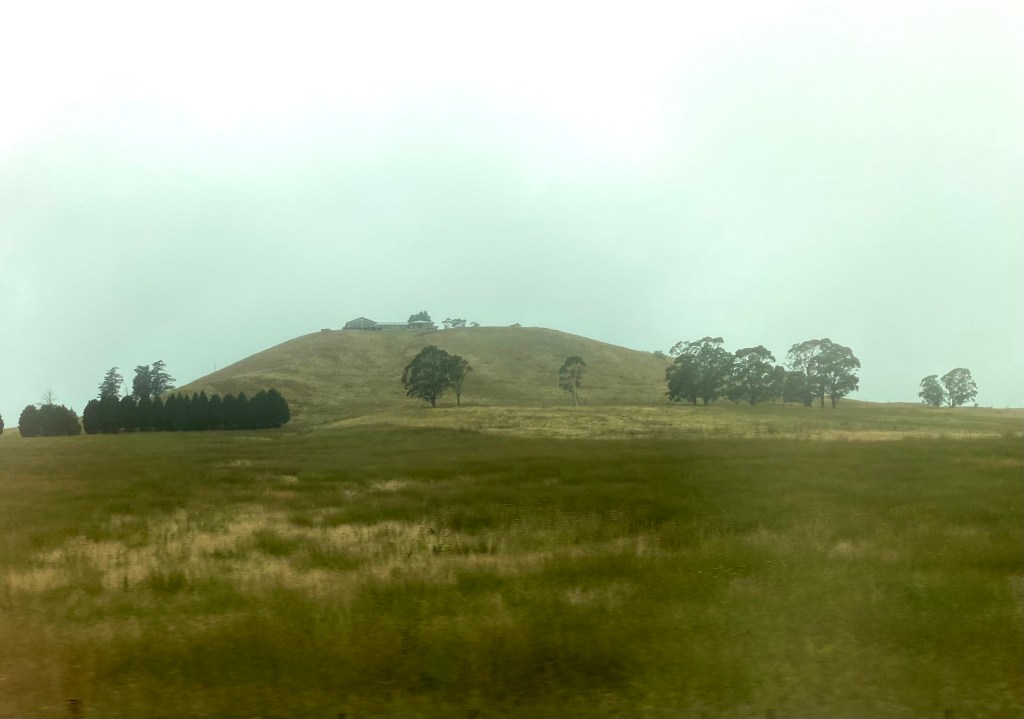
This was followed by a long descent to Picton, the train passing through native forests en route. My online guide directed me to view the wide variety of eucalyptus as the train wound around several horseshoe curves.
The final part of the train’s journey was through Sydney’s suburbs, with the train crossing Australia’s oldest railway bridge – the Menangle Bridge – over the Nepean River. The bridge was opened in 1863.
The XPT pulled into Sydney’s Central Station about 20 minutes behind schedule. For information about Sydney and its attractions, please refer to the Newcastle and Central Coast Line blog post.
Final thoughts from my travel companion: “A pleasant enough trip when in good company.”
[1] The Man in Seat 61, ‘A Guide to Train Travel in Australia’ (online, 2020).
[2] David Bowden, ‘Great Railway Journeys in Australia and New Zealand’ (John Beaufoy Publishing, 2020) 38.
[3] DCC Solutions, ‘Auscision XPT – DCC and Sound Installation with Lighting Modifications’ (online, 2013–2020).
[4] Australian Transport Safety Bureau, ‘Signal passed at danger by XPT ST24’ (Transport Safety Report, 5 February 2011) 3.
[5] Anthony Albanese, ‘Labor will get High Speed Rail back on track’ (Media Release, 10 May 2019).
[6] Fergus Hunter, ‘Labor backs ’economic game-changer’ high-speed rail as part of pandemic recovery’, Sydney Morning Herald (19 April 2020).
[7], [8], [9], [10] David Bowden, ‘Great Railway Journeys in Australia and New Zealand’ (John Beaufoy Publishing, 2020) 40–41.

 Tales from Rails
Your travelling companion would like to temper the online guide’s claim (repeated here) of “ten changes in scenery/topography” throughout the journey, as this seems to imply white-knuckle, edge-of-your-seat, almost-one-change-an-hour levels of excitement. This may be off-putting for your readers, which your companion assumes are mostly geriatric and unable to cope with such high-octane travelling experiences due to health concerns. So, for the benefit of your readers, he would like to emphasise that there is no risk of excitement during this journey.
LikeLike
Dear Mr. Denizen,
Your reference towards the readers of this blog being geriatric is very much not appreciated. I will have you know that I served in the Royal Train Force and defended the Free World in Operation Market Train Station. The only reason young fellows like you can breath free air today is for the many good men and women in the Allied Train Forces that died to protect that freedom. To see that you use that freedom to mock those that protect your Lives, your Fortunes and your sacred Honor is outrageous. Just as the US Supreme Court ruled in Texas v. Johnson, 491 U.S. 397 (1989), the blog writer needs to rule that Train Mockery is illegal.
Good Day,
Wolfgang, Supreme Allied Commander European Train Forces
LikeLike
Dear Wolfgang,
I believe that you are misconstruing the intent of my humble message. My warning was in fact for the benefit of the fine folk who defended the Free World so valiantly, as over-stimulation from frequently changing scenery is (as you must already know) a common trigger for PTSD among Train Force personnel. By informing readers that excitement is not, in fact, a risk for this particular journey, I am suggesting that fine readers such as yourself are able to partake in the reward that you deserve for your service: a dull, 11+ hour train trip which is entirely excitement-free from boarding to alighting.
Sincerely,
Dr. Denizen
LikeLike
Dr. Denizen,
Your dismal reply proves you never served in the Armed Train Forces. Anyone who served on a train in time of war knows that trains are the very antidote to any kind of stress or PTSD: The soothing rattling of the wheels below you, the scenic exterior and the calm train related conversations on board is all you need to cure whatever ails you. [Redacted for exaggerating the healing potential of trains]. [Redacted for making unwarranted assumptions about the train blogger].
Outraged,
Wolfgang, Train Veteran
LikeLike
the long-awaited update! always appreciative of how much research goes into these journeys and posts (love the footnotes). you’ve alluded to this being a journey that you’ve already taken twice – i wanted to ask, did you notice anything different/new this time around? the photos are (as always) lovely and i especially admire the focus on both greenery and industrial scenery. the highest quality train blog i’ve ever read!
LikeLike
Dear the no.1 train blog fan,
Please forgive me for my incredibly slow reply. As I’m sure you’ll understand, I was just too busy thinking about trains. Thank you for your kind comments about the train blog. As to your question – unfortunately the first time I took this journey I could not relax and enjoy the scenery because I was seated near an obstreperous pack of teenagers whom I feared would steal my luggage. The second time I took this journey I was preoccupied with preparatory readings for a class on the philosophical foundations of the common law. It was not until this third journey that I was able to properly appreciate the scenery.
Best wishes,
KDT
LikeLike